
Webflow is a powerful no-code website design and development platform that allows users to design, build, and launch fully responsive websites without writing traditional code. It combines the flexibility of professional web development with the ease of visual design tools, making it a preferred choice for designers, startups, marketers, and businesses looking for complete creative control.
Unlike basic website builders, Webflow generates clean HTML, CSS, and JavaScript in the background while you design visually. This means your website is not only beautiful but also fast, scalable, and production-ready.
How Webflow Works

Webflow uses a visual canvas that mirrors real web development. Every layout, spacing, animation, and interaction you create is translated into high-quality code automatically. This gives users full design freedom without relying on templates or plugins.
At the same time, Webflow handles hosting, security, and performance optimization, allowing creators to focus on design and content rather than technical setup.
Why Webflow Is a True No-Code Platform
Webflow is called a no-code tool because it removes the need for manual coding while still offering professional-level output. Users can create complex layouts, dynamic pages, and interactive elements without touching code.
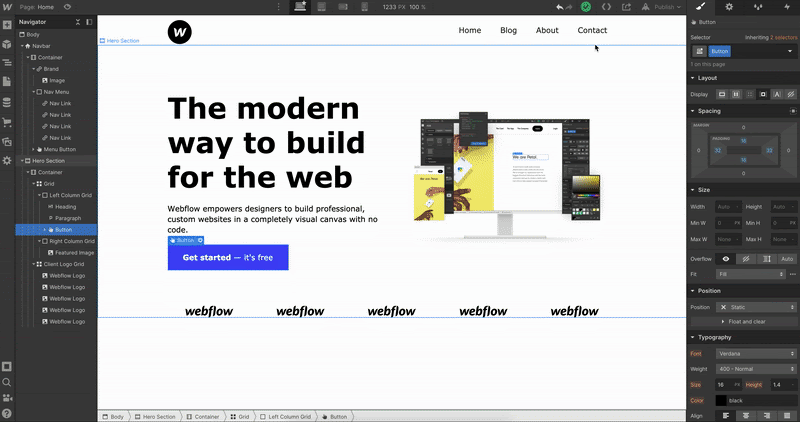
For advanced users, Webflow also allows custom code integration, making it flexible for both beginners and professionals.
Webflow Design Capabilities
Webflow offers complete design freedom with pixel-perfect control. You can build fully responsive layouts that adapt seamlessly to desktop, tablet, and mobile screens. Animations, hover effects, scroll interactions, and transitions can be created visually, enhancing user experience without slowing down performance.
This level of control makes Webflow ideal for modern, visually rich websites.
Webflow CMS Explained
Webflow includes a powerful Content Management System (CMS) that allows users to manage dynamic content easily. Blogs, portfolios, product listings, case studies, and landing pages can be created using structured content collections.
The CMS separates design from content, making updates simple while keeping the visual layout consistent. This is especially useful for teams, marketers, and growing businesses.
Webflow Hosting and Performance
Webflow provides fast, reliable hosting powered by a global content delivery network. Websites built on Webflow load quickly, are automatically optimized for performance, and include built-in SSL security.
There’s no need for third-party hosting providers or manual server management, making Webflow a complete end-to-end solution.
SEO Features in Webflow

Webflow is built with SEO best practices in mind. Users can easily customize meta titles, meta descriptions, URLs, alt text, and structured data. Clean code output helps search engines crawl and index websites efficiently.
Advanced SEO settings, fast loading speeds, and mobile optimization make Webflow a strong choice for ranking on Google.
Who Should Use Webflow
Webflow is ideal for designers who want creative freedom, businesses that need professional websites, startups looking for speed, and marketers focused on conversions. It also works well for agencies building client websites and freelancers managing multiple projects.
Even beginners can use Webflow, though the platform truly shines for users who want full design control without development dependency.
Webflow vs Traditional Website Builders
Unlike template-based builders, Webflow allows custom layouts and advanced interactions without restrictions. Compared to traditional CMS platforms, it removes plugin dependency, reduces maintenance, and improves security.
This makes Webflow a modern alternative for those who want performance, design freedom, and scalability in one platform.
Advantages of Using Webflow
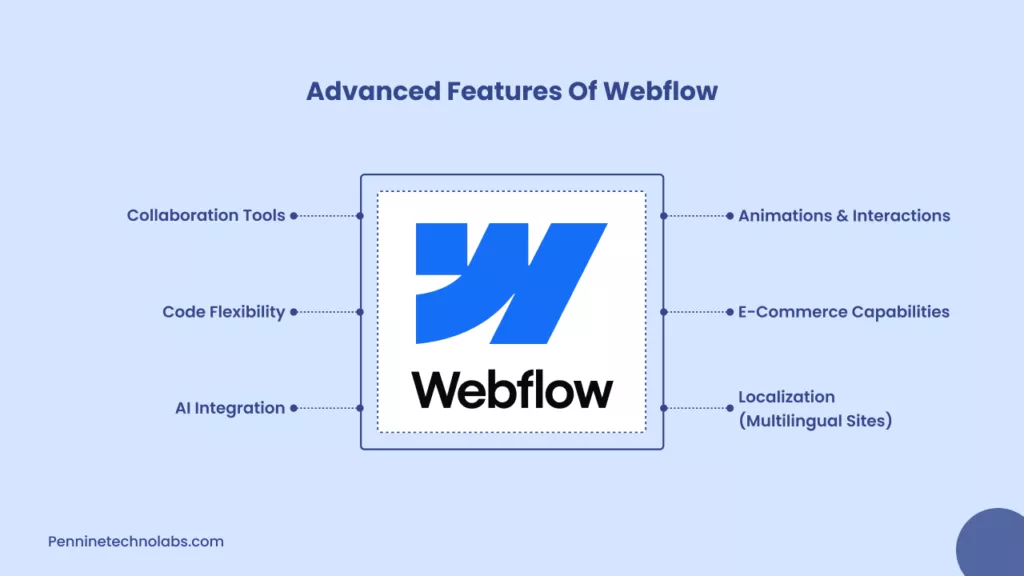
Webflow offers professional design flexibility, clean code output, built-in hosting, strong SEO tools, and scalable CMS functionality. It reduces development time while delivering enterprise-level results.
The platform bridges the gap between design and development, empowering creators to launch faster and smarter.
Is Webflow Worth It?
Webflow is worth it for anyone serious about building high-quality websites without relying on developers. While it has a learning curve, the long-term benefits—speed, control, and performance—make it a valuable investment.
As no-code technology continues to grow, Webflow stands out as one of the most advanced and future-ready platforms available today.
Webflow is more than just a website builder—it is a complete no-code web design ecosystem. With its visual development approach, powerful CMS, built-in hosting, and SEO-friendly structure, Webflow enables anyone to create professional, scalable, and modern websites with confidence.
#Webflow #NoCode #NoCodeWebDesign #WebDesign #WebsiteBuilder #WebflowDesign #WebflowCMS #ResponsiveDesign #UXDesign #Carrerbook#Anslation#UIDesign #ModernWebDesign #WebDevelopment #FrontendDesign #SEOFriendly #DigitalDesign #StartupTools #CreativeDesign #OnlineBusiness