
Technology is moving faster than ever, and 2026 is shaping up to be an important year for artificial intelligence, automation, smart devices, cybersecurity, and digital innovation. What once seemed like futuristic technology is now becoming part of everyday life. AI assistants can help with research and writing, businesses are automating repetitive tasks, and smarter devices are making homes, workplaces, and cities more connected.
The biggest change is not simply that new technologies are being created. It is how quickly these technologies are becoming practical. Companies are looking for tools that save time, developers are building AI into everyday software, and consumers are becoming more comfortable using intelligent digital products.
Here are some of the major technology and AI trends to watch in 2026 and how they could influence the way people work, create, communicate, and use digital services.
1. AI Agents Are Becoming More Practical
AI is moving beyond simple question-and-answer chatbots. One of the most noticeable developments is the rise of AI agents designed to complete multi-step tasks.
Instead of only generating an answer, an AI agent can potentially help organize information, analyze data, create a plan, interact with software, and complete several connected steps. This makes AI more useful for real-world workflows.
For example, a marketing professional could use an AI agent to research a topic, organize keywords, prepare a content outline, and create a first draft. A business team could use similar technology to summarize reports or organize customer information.
| AI Agent Use | Potential Benefit |
|---|---|
| Research | Faster information gathering |
| Content creation | Quicker first drafts |
| Data analysis | Easier identification of patterns |
| Customer support | Automated responses and workflows |
| Project management | Better task organization |
The important shift is from AI that responds to AI that helps perform tasks.
2. Generative AI Is Expanding Beyond Text
Generative AI is no longer limited to writing paragraphs or answering questions. It is increasingly being used to create images, videos, audio, presentations, designs, software code, and other digital assets.
For creators, this can reduce the amount of time spent on repetitive production work. A designer might use AI to explore multiple visual concepts before developing the final design. Video creators can experiment with scripts, voiceovers, storyboards, and editing assistance.
The technology does not necessarily replace the creative process. In many cases, it acts more like an additional tool that helps people move from an idea to a usable draft faster.
This is especially relevant for small teams and individual creators who may not have access to large production resources.
3. AI-Powered Search Is Changing How People Find Information

Traditional search engines are also evolving as AI becomes part of the search experience.
Instead of typing several searches and opening multiple pages, users can increasingly ask questions in a conversational way and receive summarized information. AI-powered search can also help users refine questions, compare information, and explore related topics.
This change matters for websites and content creators because people may discover information differently than they did in the past.
Businesses will need to focus on useful, accurate, original content rather than simply producing pages filled with keywords. Clear explanations, trustworthy information, strong structure, and real value can become even more important.
4. AI in Everyday Productivity
AI is becoming a regular part of workplace productivity.
Email writing, meeting summaries, document analysis, presentations, spreadsheets, scheduling, brainstorming, and research can all benefit from AI-assisted workflows.
For employees, the main advantage is often time savings. Instead of starting every task from scratch, AI can help create a first version that a person can review and improve.
A simple productivity workflow might look like this:
Idea → AI-assisted draft → Human review → Editing → Final output
The human review stage remains important because AI-generated content can contain errors, outdated information, or wording that does not match the intended audience.
5. Smaller and More Efficient AI Models
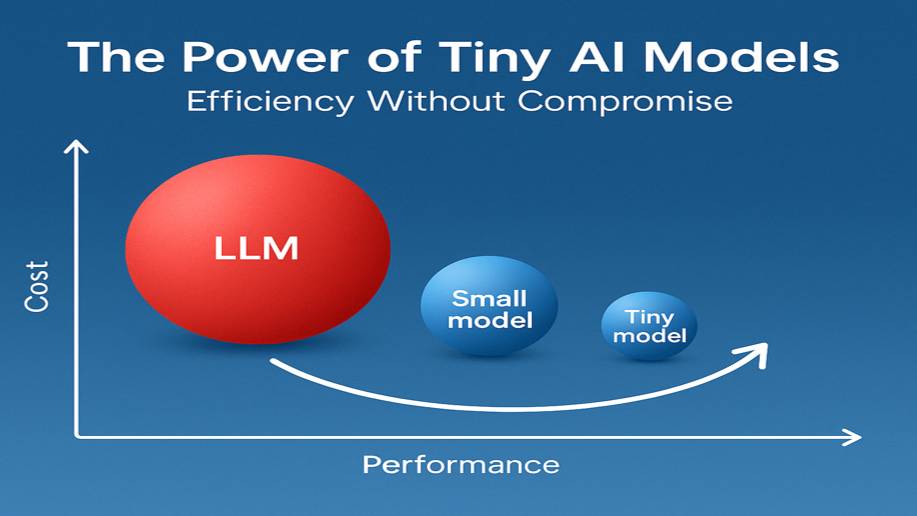
Large AI systems receive much of the attention, but smaller AI models are also becoming increasingly important.
Not every task requires the biggest available model. Smaller models can be useful when organizations need faster responses, lower computing requirements, or greater control over where information is processed.
This could encourage more AI features to appear directly inside applications, computers, smartphones, and other devices.
The broader trend is toward making AI more efficient rather than simply making models larger.
6. AI on Smartphones and Personal Devices
Smartphones are becoming more intelligent as AI capabilities move directly onto devices.
Features such as photo editing, translation, voice assistance, text summarization, personalization, and image recognition can increasingly work with AI capabilities built into the device or its operating system.
This creates a more seamless experience because users do not always need to open a separate AI application.
| Smartphone AI Feature | Everyday Example |
|---|---|
| Photo enhancement | Improving lighting or removing unwanted elements |
| Translation | Understanding another language |
| Voice assistance | Completing tasks through spoken commands |
| Writing assistance | Rewriting or summarizing text |
| Image recognition | Identifying objects or information |
As device hardware improves, AI-powered features are likely to become a standard part of smartphones rather than an unusual extra.
7. Edge AI and On-Device Computing
Another important development is the movement of AI processing closer to the device.
This approach, often called edge AI or on-device AI, can reduce the need to send every piece of information to a remote server. It can also help applications respond more quickly in certain situations.
For businesses, edge computing can be useful in areas such as manufacturing, retail, healthcare technology, transportation, and security systems.
For consumers, it could mean faster AI-powered features on phones, laptops, cameras, vehicles, and smart-home devices.
8. AI-Powered Cybersecurity
As organizations use more AI, cybersecurity is becoming even more important.
AI can be used to detect unusual activity, identify potential threats, analyze large volumes of security data, and help security teams respond to incidents.
At the same time, cybercriminals can also use advanced technology to create more sophisticated scams and attacks. This creates a continuous competition between security professionals and attackers.
Businesses are therefore paying more attention to automated threat detection, identity protection, secure authentication, and employee security awareness.
Strong passwords, multi-factor authentication, software updates, and careful handling of suspicious messages remain important even as security technology becomes more advanced.
9. Humanoid Robots and Smarter Robotics
Robotics is another area attracting significant attention.
Robots are being developed for industrial production, warehouses, logistics, research, and other environments. AI can make robots more capable of understanding their surroundings and responding to changing conditions.
Humanoid robots are particularly interesting because their human-like form could allow them to operate in environments already designed for people.
However, widespread adoption depends on several factors, including cost, safety, reliability, energy consumption, and the ability to perform useful tasks consistently.
The next stage of robotics is likely to focus less on impressive demonstrations and more on practical applications.
10. Smart Homes Are Becoming More Connected
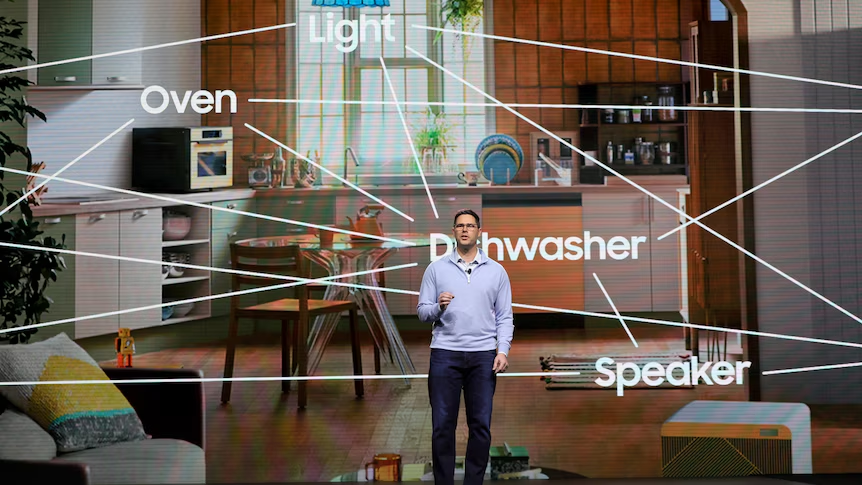
Smart-home technology continues to develop through better connectivity and automation.
Lights, thermostats, cameras, appliances, speakers, and security systems can communicate with each other to create more automated environments.
AI can add another layer of intelligence by learning patterns and helping devices respond to user preferences.
For example, a smart home could automatically adjust lighting, manage energy consumption, or provide alerts when unusual activity is detected.
The challenge is making these systems easy to configure and ensuring that connected devices are properly secured.
11. Autonomous Vehicles and Intelligent Transportation
AI is playing an important role in the development of autonomous and assisted driving technologies.
Modern vehicles already use cameras, sensors, software, and machine learning for features such as lane assistance, parking support, collision warnings, and adaptive cruise control.
The broader goal is to make transportation more automated and responsive.
Beyond personal vehicles, AI can also influence logistics, delivery systems, traffic management, and public transportation.
Progress in this area will depend heavily on safety testing, regulations, infrastructure, and real-world performance.
12. AI in Healthcare Technology
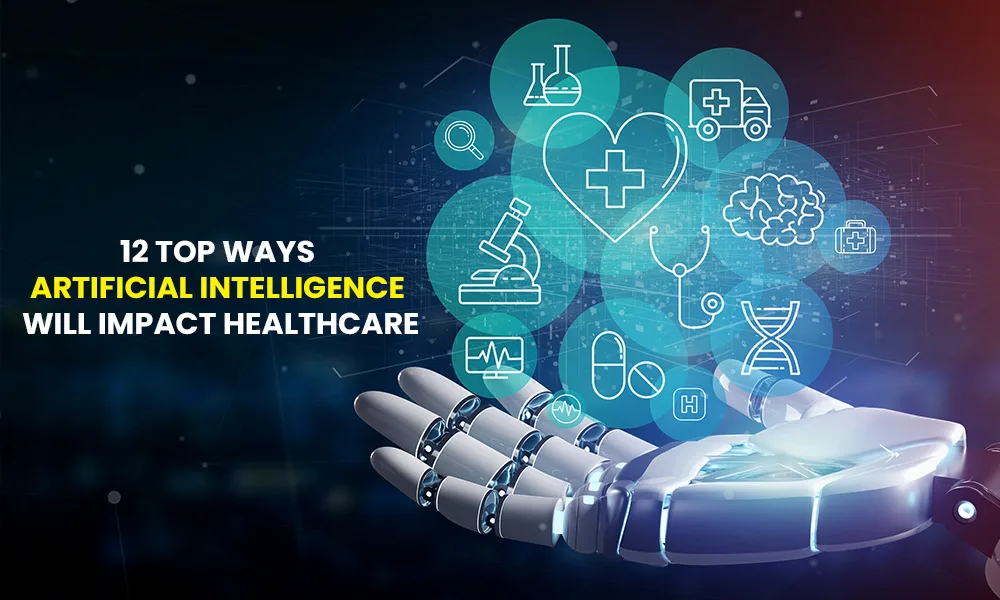
Healthcare is another field where AI applications are expanding.
AI can assist with medical research, administrative work, image analysis, documentation, drug discovery, and patient-data organization.
One potential benefit is helping professionals process large amounts of information more efficiently. AI systems can identify patterns in datasets that might otherwise take significant time to analyze.
However, healthcare AI requires careful oversight. Accuracy, privacy, security, transparency, and professional review are particularly important when technology is used in medical environments.
13. AI-Powered Personalization
Personalization is becoming more sophisticated across digital services.
Streaming platforms, online stores, educational platforms, social applications, and productivity tools can use data and AI to provide recommendations tailored to individual users.
Instead of showing exactly the same experience to everyone, platforms can adjust content, suggestions, and interfaces according to user behavior.
For businesses, personalization can improve customer experiences. For consumers, it can make digital services easier to navigate.
At the same time, companies need to handle personal data responsibly and clearly communicate how information is being used.
14. Spatial Computing and Extended Reality
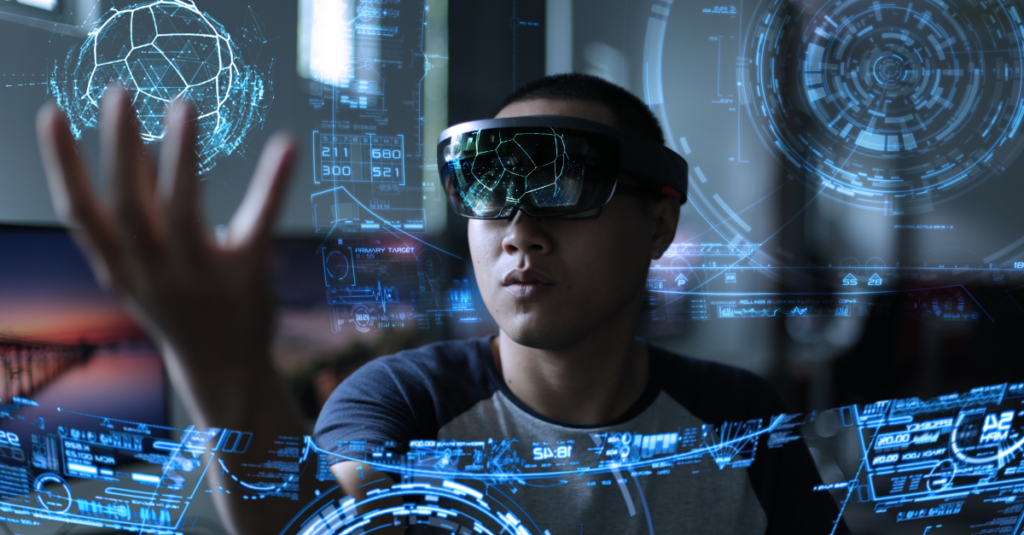
Virtual reality, augmented reality, and mixed reality are continuing to develop.
These technologies can create digital experiences that interact with physical surroundings. Applications range from gaming and entertainment to training, education, design, engineering, and remote collaboration.
Spatial computing could become particularly useful in situations where seeing a digital object in a physical environment provides an advantage.
For example, designers could visualize products before manufacturing them, while students could explore interactive 3D environments as part of learning.
15. Quantum Computing Continues to Develop
Quantum computing remains an emerging field, but it is one of the technologies worth watching closely.
Unlike conventional computers, quantum computers use quantum mechanical principles to process information in different ways. Researchers are exploring their potential applications in areas such as optimization, chemistry, materials science, and cryptography.
Quantum computing is not expected to replace everyday computers. Instead, its long-term potential lies in solving certain types of complex problems that are difficult for traditional systems.
The technology still faces significant technical challenges, so practical large-scale applications remain an important area of research.
16. Sustainable Technology and Green Computing
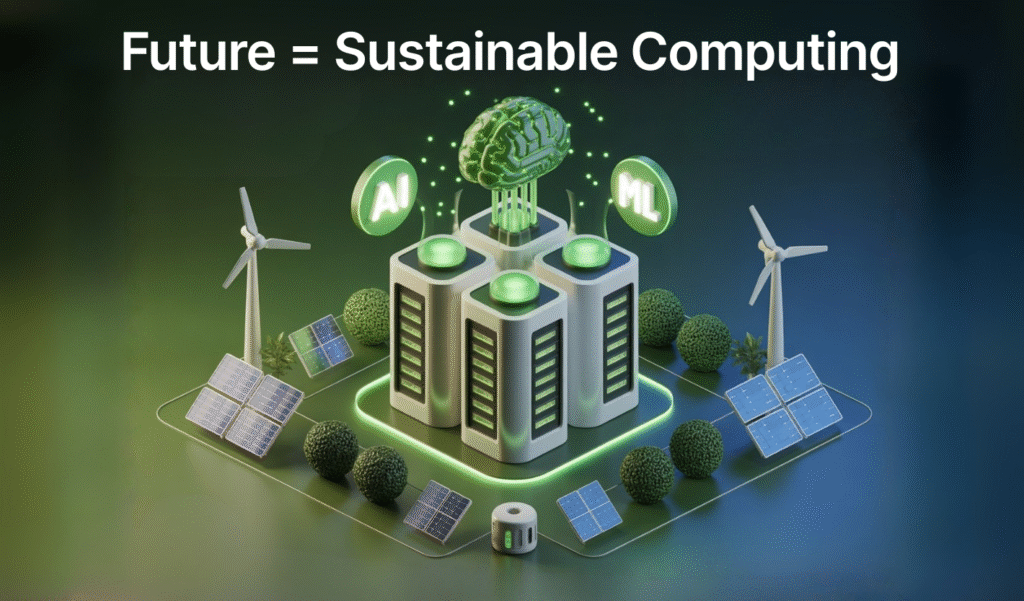
The growing demand for AI and digital services also raises questions about energy consumption.
Data centers, AI models, cloud computing, and digital infrastructure require significant amounts of electricity and cooling resources. This is encouraging companies and researchers to explore more efficient hardware, software, data centers, and energy systems.
Green computing focuses on reducing the environmental impact of technology throughout its lifecycle.
Future technology development is therefore likely to focus not only on performance but also on efficiency.
17. AI-Powered Education
Education is another area where AI tools are becoming increasingly useful.
Students can use AI for brainstorming, explanations, language practice, study planning, and personalized learning support. Teachers can use technology to help prepare educational materials, organize information, and create learning activities.
The most useful approach is generally not treating AI as a replacement for learning. Instead, it can act as a support tool that helps students understand difficult concepts and practice skills.
Schools and educators are also paying more attention to responsible AI use, originality, fact-checking, and digital literacy.
18. AI and the Future of Software Development
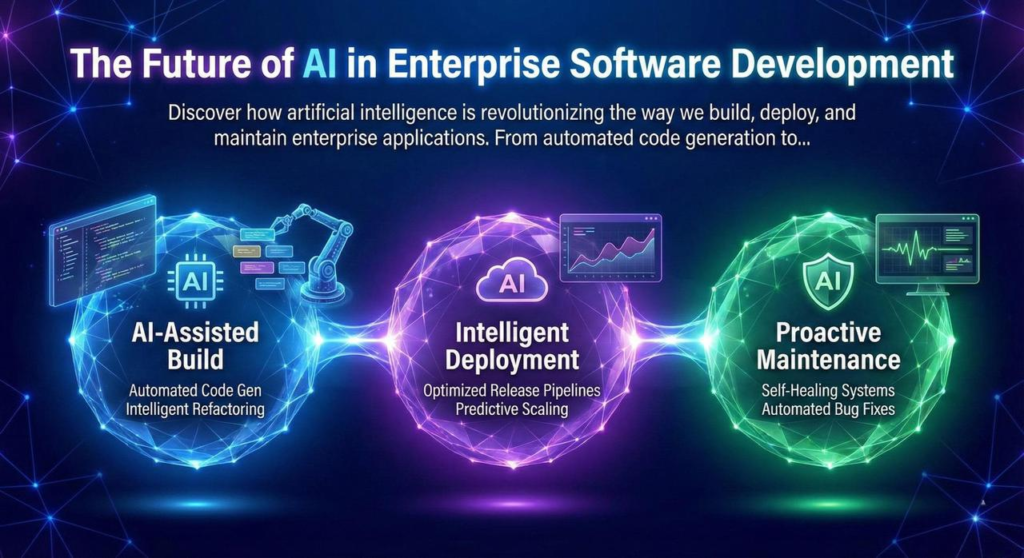
Software development is changing as AI coding assistants become more capable.
Developers can use AI to generate code suggestions, explain unfamiliar code, identify potential bugs, create tests, and speed up routine development work.
This does not remove the need for programming knowledge. Developers still need to understand architecture, security, performance, testing, and the requirements of the project.
The workflow is gradually shifting from writing every line manually toward a combination of human planning, AI assistance, testing, and review.
19. Digital Twins for Real-World Systems
Digital twins are virtual representations of physical objects, systems, or environments.
They can be used to monitor equipment, simulate changes, analyze performance, and predict potential problems.
For example, a manufacturer could create a digital representation of a machine and use real-world data to understand how it is operating.
Digital twins can be especially useful when testing a physical system directly would be expensive, slow, or risky.
20. Stronger Focus on Responsible AI
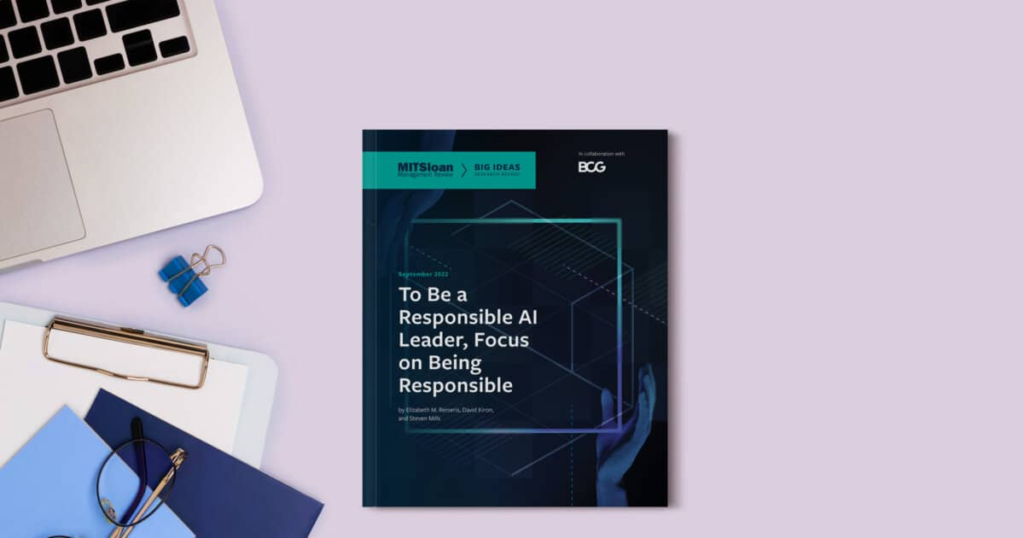
As AI becomes more powerful, responsible development is becoming a central part of technology discussions.
Businesses and governments are paying greater attention to issues such as data privacy, security, transparency, copyright, bias, safety, and accountability.
For everyday users, responsible AI also means understanding that AI-generated information should not automatically be treated as accurate.
A practical approach is simple: use AI to accelerate work, but verify important information before relying on it.
Technology Trends to Watch in 2026
| Technology | What Is Changing | Potential Impact |
|---|---|---|
| AI Agents | Multi-step task automation | More efficient workflows |
| Generative AI | Text, image, audio and video creation | Faster content production |
| Edge AI | More processing on devices | Faster and more private experiences |
| Robotics | Smarter physical automation | Changes in manufacturing and logistics |
| Cybersecurity AI | Automated threat detection | Faster security responses |
| Spatial Computing | Digital content in physical spaces | New ways to learn and work |
| Quantum Computing | New approaches to complex computing | Long-term scientific applications |
| Digital Twins | Virtual models of real systems | Better monitoring and planning |
| Green Computing | More efficient infrastructure | Lower resource consumption |
| AI Education | Personalized learning support | More flexible learning experiences |
How Businesses Can Prepare for These Trends
Businesses do not need to adopt every new technology immediately. A better starting point is identifying repetitive tasks, operational problems, and customer needs where technology could provide measurable value.
For example, a company could begin with AI-assisted customer support, content workflows, data analysis, or internal knowledge management.
Before introducing a new tool, businesses should consider:
- What problem does the technology solve?
- How much time or money could it save?
- What data will the system access?
- How will accuracy be checked?
- Who will be responsible for reviewing its output?
- What security and privacy measures are required?
- Can employees use the technology effectively?
This practical approach can help organizations avoid adopting technology simply because it is trending.
Skills That Will Matter in a More AI-Driven Workplace
As AI becomes more common, technical skills will remain valuable, but human skills will continue to matter as well.
Critical thinking, communication, creativity, problem-solving, research, adaptability, and the ability to evaluate information can become increasingly important.
People who know how to work with AI tools while also understanding their limitations can use technology more effectively.
| Skill | Why It Matters |
|---|---|
| AI literacy | Helps users understand AI capabilities |
| Critical thinking | Helps identify inaccurate information |
| Creativity | Supports original ideas and solutions |
| Communication | Improves human-AI collaboration |
| Data literacy | Helps interpret digital information |
| Cybersecurity awareness | Reduces security risks |
| Adaptability | Makes it easier to learn new tools |
Frequently Asked Questions
What is the biggest technology trend in 2026?
AI remains one of the most influential technology trends in 2026, particularly through AI agents, generative AI, on-device intelligence, automation, and AI-powered software.
Will AI replace human workers?
AI is changing how many tasks are performed, but the impact varies by industry and occupation. In many workplaces, AI is being used to assist employees with repetitive or information-heavy tasks rather than completely replacing entire roles.
Is quantum computing ready for everyday use?
Quantum computing is still an emerging technology. Researchers are working on practical applications, but it is not a replacement for conventional computers used for everyday tasks.
How can people prepare for future technology?
Learning AI basics, improving digital skills, developing critical thinking, understanding cybersecurity, and staying comfortable with new software can help people adapt as technology changes.